Animal Nutrition
Microbiota of healthy dogs demonstrate a significant decrease in richness and changes in specific bacterial groups in response to supplementation with resistant starch, but not psyllium or methylcellulose, in a randomized cross-over trial
Microbiota of healthy dogs demonstrate a significant decrease in richness and changes in specific bacterial groups in response to supplementation with resistant starch, but not psyllium or methylcellulose, in a randomized cross-over trial
- 저자: Salavati Schmitz S; Salgado JP; Glendinning L
- 출처: - (2024)
- DOI/링크: https://doi.org/10.1099/acmi.0.000774.v4
- 연구 계열: Topics/Animal Nutrition
- 투고일: 2024-01-24
TL;DR
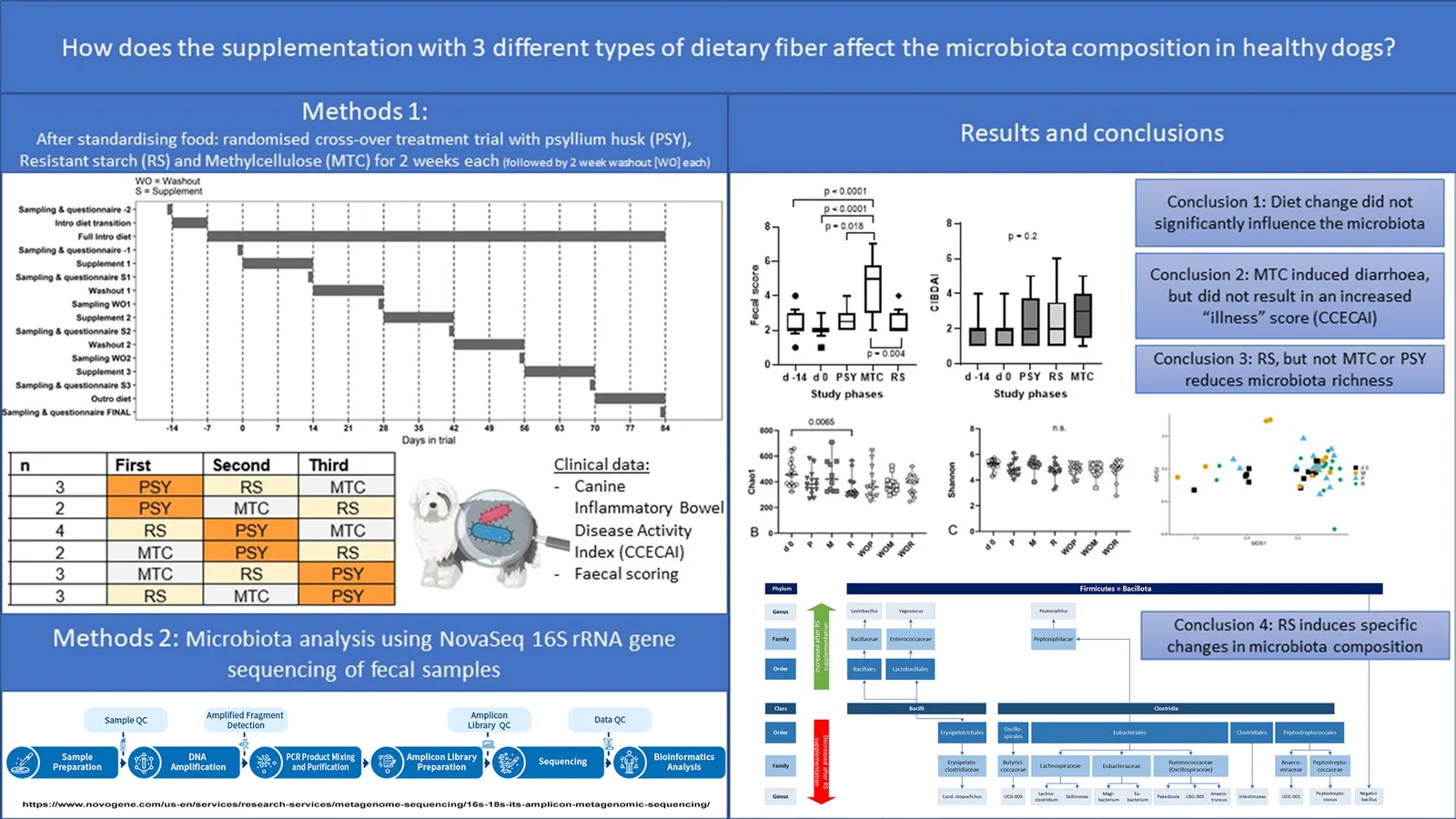
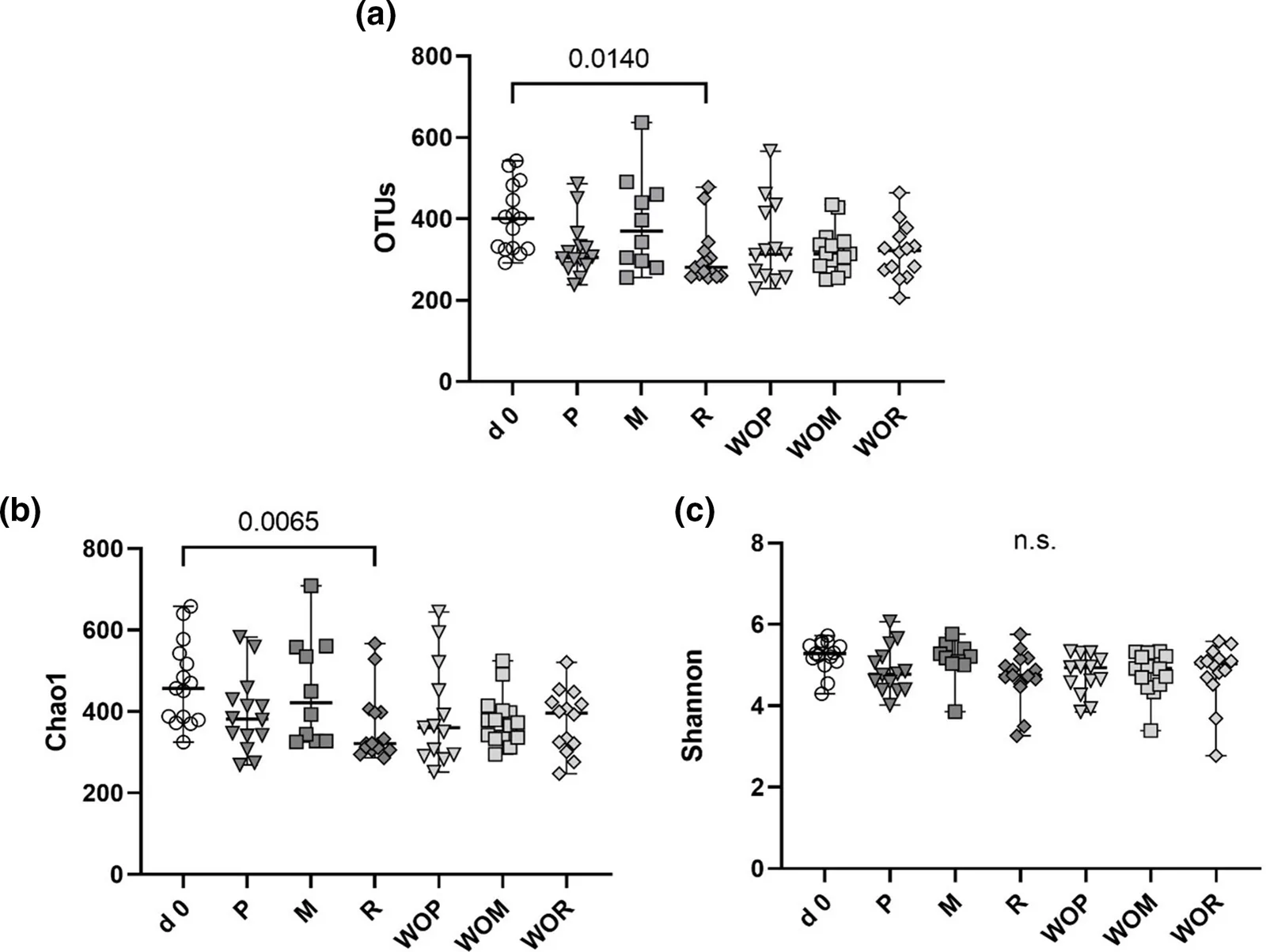
건강한 개 17마리에게 psyllium, 바나나 가루 유래 저항전분(RS), methylcellulose를 교차 설계로 2주씩 급여하고 분변 미생물총을 16S rRNA로 분석했다. RS만 미생물 풍부도(observed OTU, Chao1)를 유의하게 줄이고 SCFA 생산 Bacillota를 감소시켜 불리한 조성을 시사했으며, 이 RS는 프리바이오틱으로 권장되지 않는다. methylcellulose는 분변 점수를 높였으나 미생물총에는 영향이 없었고 psyllium의 변화는 소량 속(genus)에 한정되어 생물학적 의미가 불확실했다.
1. 연구 배경 및 동기
- 다루는 문제: 식이섬유는 개에서 프리바이오틱 보충제로 흔히 쓰이고 psyllium은 개 장질환에 자주 권장된다. 식이섬유 섭취는 미생물 풍부도와 SCFA 생산에 영향을 준다고 알려져 있다. 개는 사람과 유사한 미생물총을 가지며 IBD 등 유사 질환을 겪는다.
- 기존의 공백 / 왜 필요한가: 섬유 종류별 개별 효과가 개 미생물총 구성에 어떤지 알려지지 않았다. 서로 다른 섬유 범주를 같은 개에서 비교한 연구가 없었다.
2. 관련 연구
- 기존 연구 흐름: RS는 다른 연구에서 Bifidobacteria와 Ruminococcus를 증가시키고 psyllium은 분변 SCFA(propionate, n-butyrate)를 높였다고 보고되었으며, methylcellulose는 마우스에서 미생물 조성과 담즙산 대사를 조절했다. 개에서 RS를 건강견에 급여한 다른 연구에서는 알파·베타 다양성 변화가 없었다.
- 이 논문의 위치: 개에서 서로 다른 범주의 식이섬유 세 종을 같은 개에서 비교하고 미생물총 변화를 세부적으로 분석한 첫 연구라고 저자들은 주장한다.
3. 핵심 기여
- psyllium, RS, methylcellulose의 개 분변 미생물총 영향을 교차 시험으로 비교함
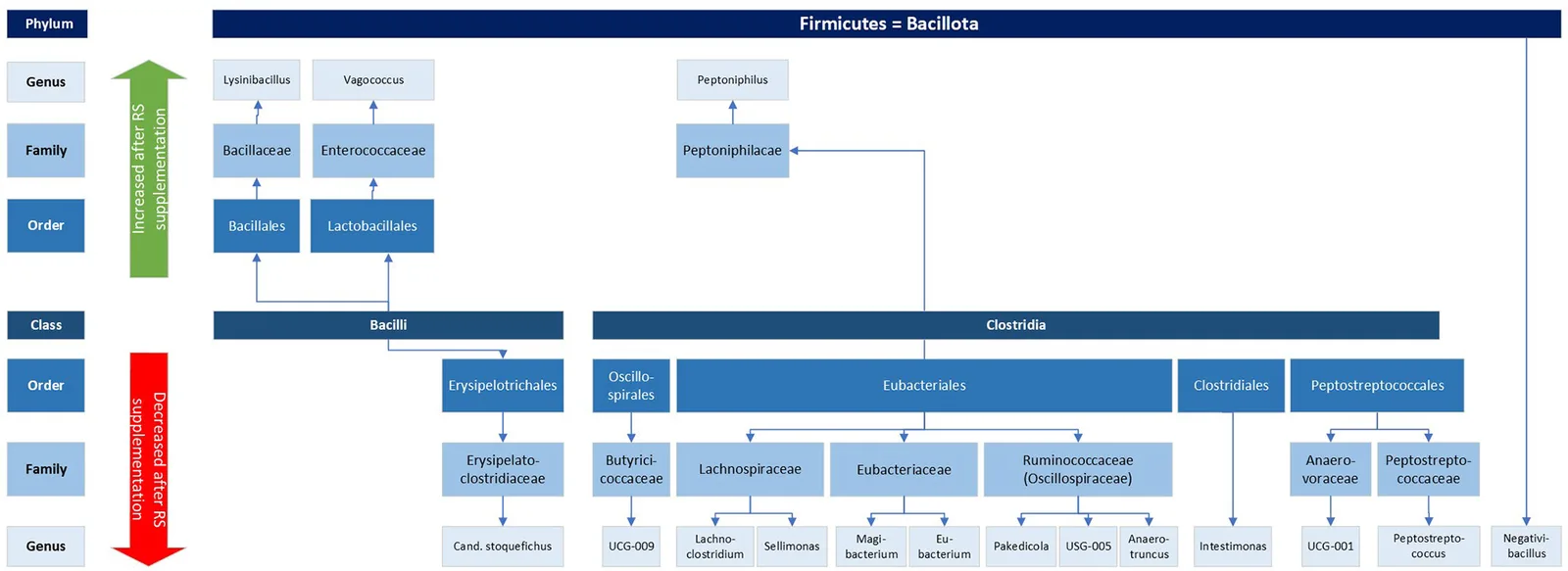
- RS가 풍부도를 줄이고 SCFA 생산 속(genus)을 줄이는 등 불리한 변화를 보임
- methylcellulose는 분변 점수를 높이나 미생물총은 변화시키지 않음을 보임
- 해당 RS를 개 프리바이오틱으로 권장하지 않는다는 근거를 제시함
4. 제안 방법론
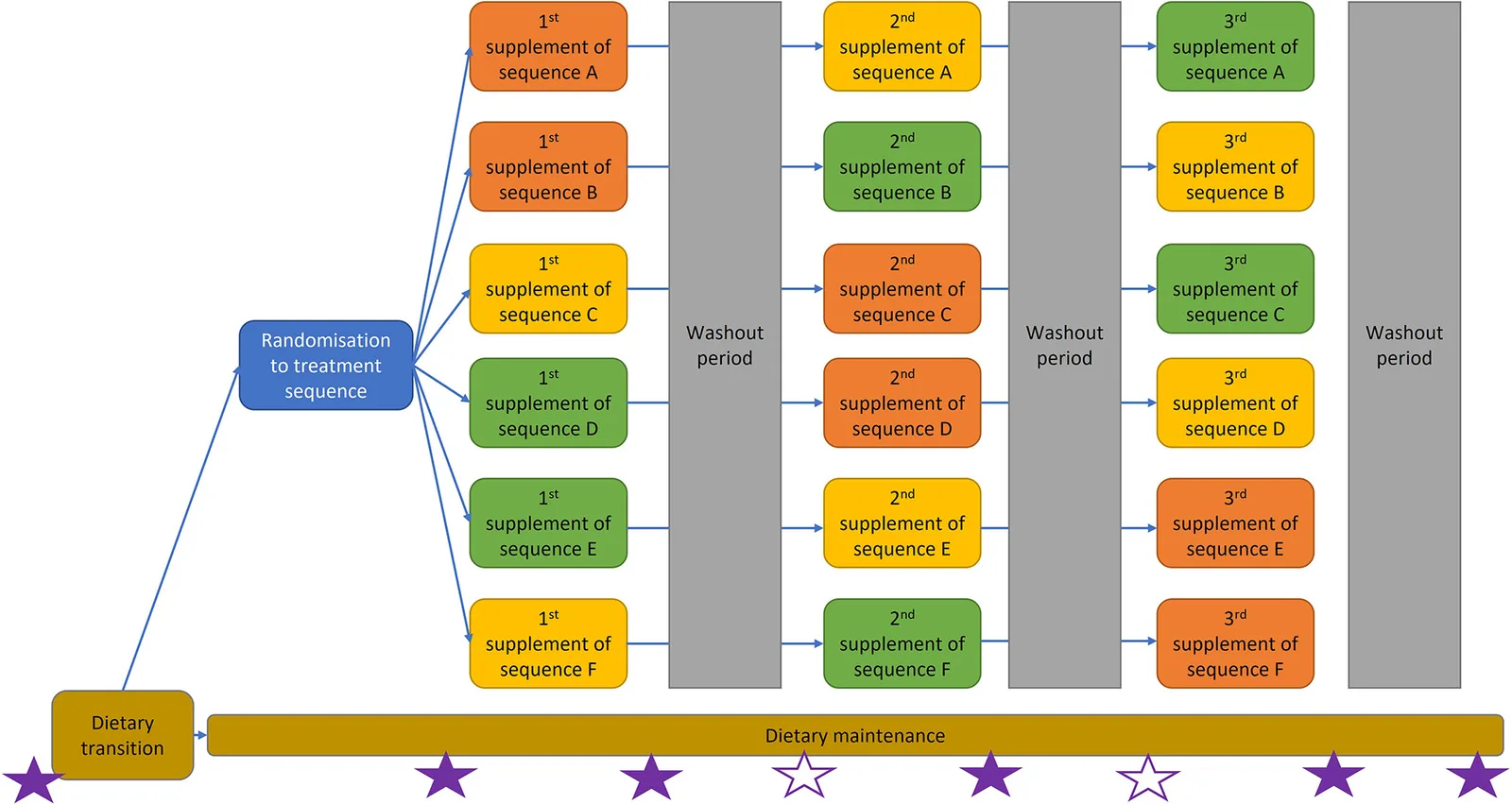
- 전체 접근 논리: 건강한 개를 동일한 완전사료로 전환한 뒤 세 섬유를 무작위 순서로 각 2주 급여하고 사이에 2주 휴지기를 두어, 같은 개 안에서 기준선과 비교했다.
- 단계:
- 개 24마리를 모집하고 같은 건식 사료로 2주 전환한 후 기준선(day 0) 분변 채취, 17마리 분석(기호성 문제 5마리, 의학적 문제 2마리 탈락)
- psyllium, 바나나 가루(RS), methylcellulose를 하루 2회, 체중별 용량으로 각 2주 급여하고 2주 휴지기를 두는 무작위 교차 급여
- 분변 점수(PFS)와 CIBDAI 기록, 급여 종료 시와 휴지기 후 분변으로 V4 16S rRNA 시퀀싱(Illumina NovaSeq)
- OTU 군집화 후 QIIME 알파 다양성, Metastats(FDR 보정) 분류군 비교, NMDS와 PERMANOVA, Kruskal-Wallis와 Dunn 사후검정
5. 실험 설정
| 항목 | 내용 |
|---|---|
| 대상/재료 | 건강한 가정견 17마리 최종 분석(처방식, 정기 약물, 보충제 투여견 제외). 완전한 자료는 13/17마리 |
| 처리 조건 | Hill’s Science Plan 성견용 건식 사료 고정 급여 + psyllium husk, 바나나 가루 유래 RS, methylcellulose를 각 2주, 휴지기 2주, 용량은 체중에 따라 2-16 g 하루 2회 |
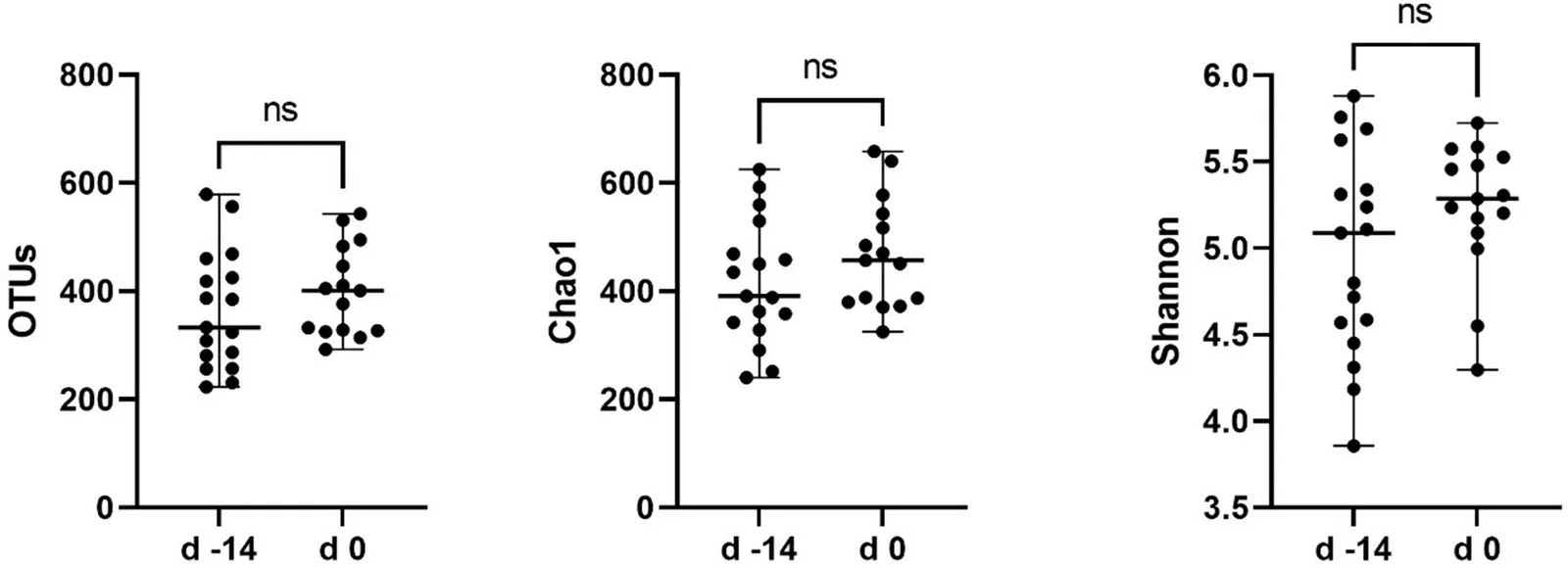
| 대조군 | 같은 사료로 전환한 뒤의 기준선 샘플(day 0)과 비교하는 개체 내 대조; 휴지기 샘플도 수집 |
| 측정 방법 | Purina Faecal Score(1-7), CIBDAI, 16S rRNA(V4) 시퀀싱, observed OTU, Chao1, Shannon, Bray-Curtis, Metastats, PERMANOVA |
6. 실험 결과 분석
| 지표 | 변화(Δ) | 조건 · 유의성 |
|---|---|---|
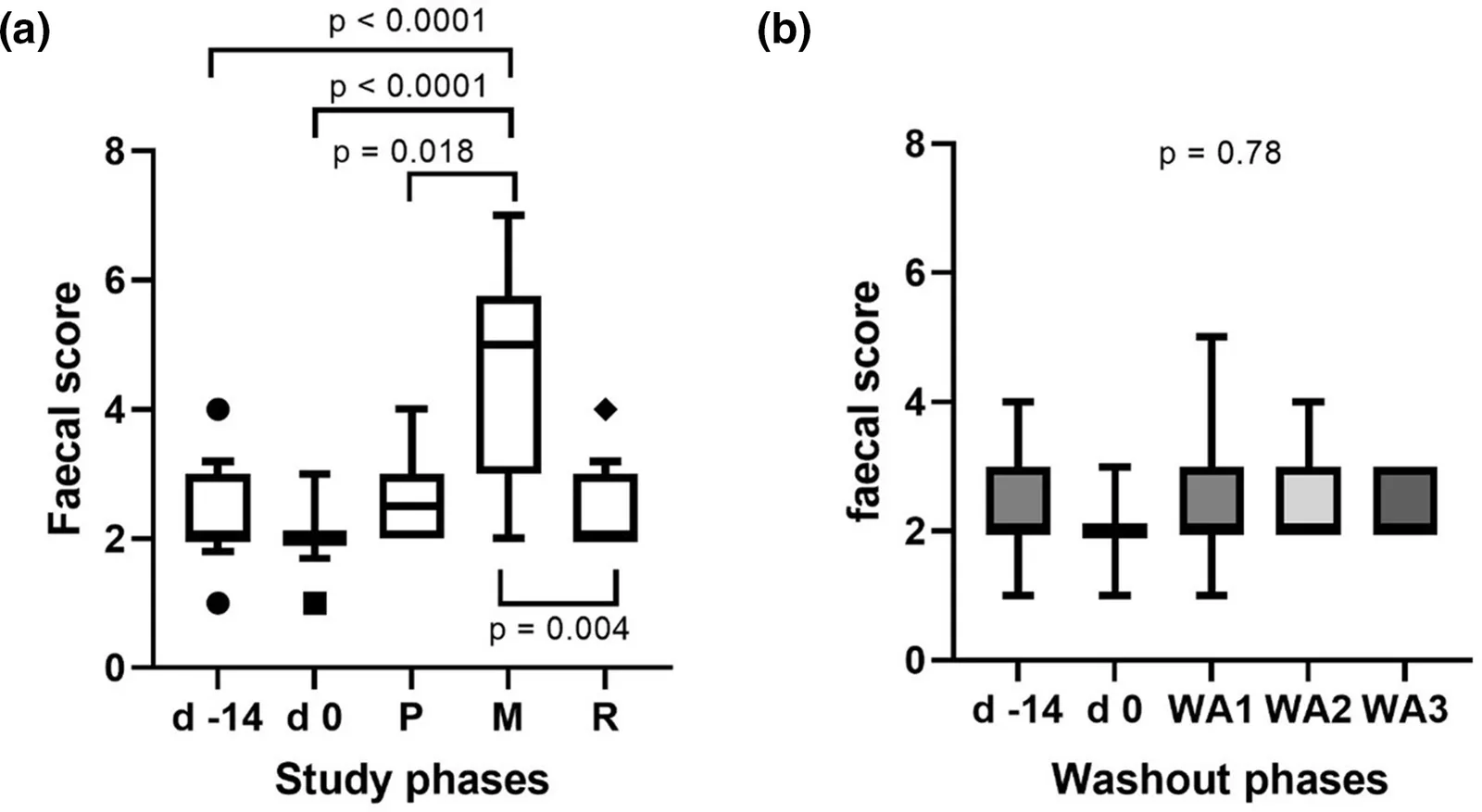
| 분변 점수 | methylcellulose 급여 시 중앙값 5(범위 3-7)로 상승 | PSY와 RS는 기준선과 차이 없음, 휴지기 후 정상으로 회복 |
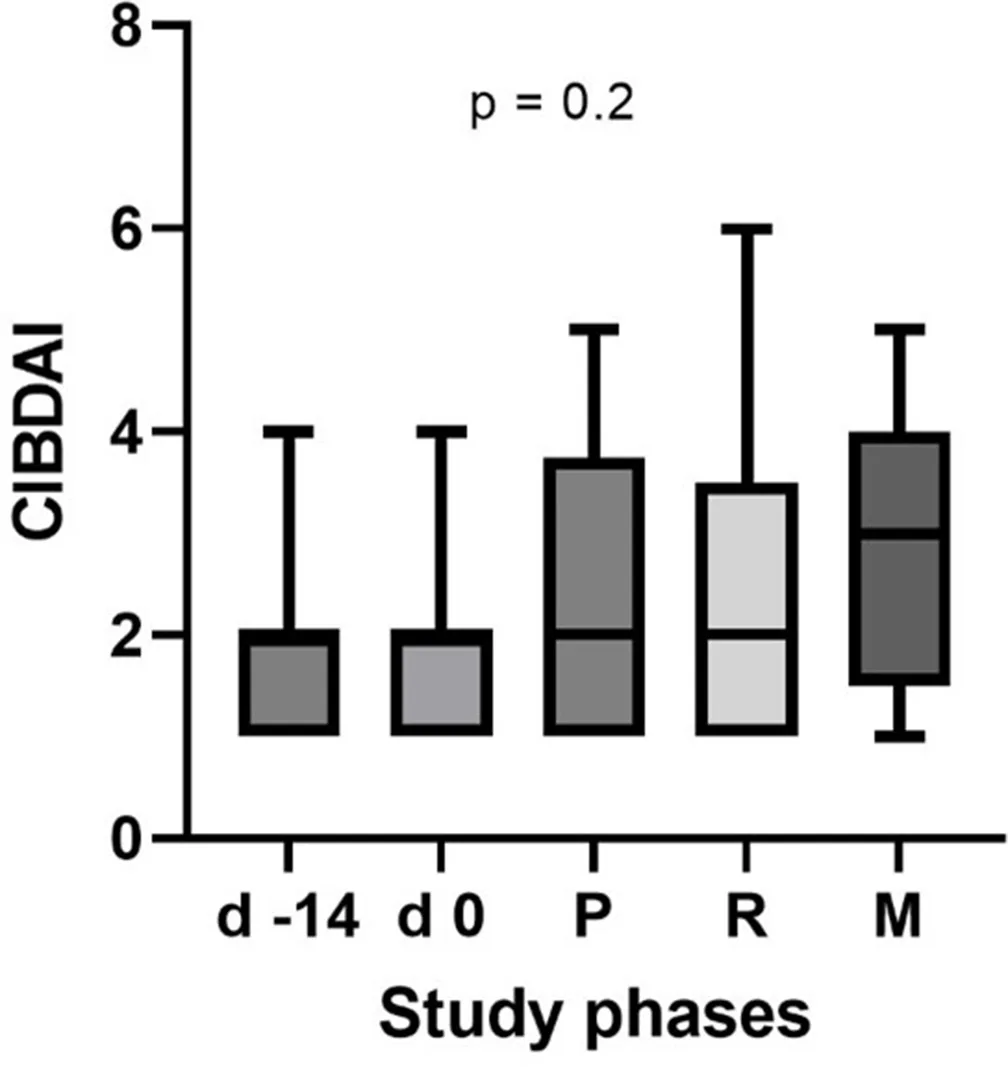
| CIBDAI | 급여 전 기간에 낮게 유지 | 섬유 종류 간 유의한 차이 없음 |
| RS의 미생물 풍부도 | observed OTU와 Chao1 유의하게 감소, Shannon 변화 없음 | 휴지기에 회복 |
| RS 급여 시 속(genus) 변화 | 기준선 대비 37개 속이 달랐고 21개 감소, 16개 증가 | Metastats q<0.05; 감소 속에는 Sellimonas, Negativibacillus, Intestinimonas 등 SCFA 관련 속 포함, 증가는 주로 환경 유래 속 |
| psyllium의 속 변화 | 12개 속이 달랐으나 모두 저존재비 | q<0.05, 가장 풍부한 Psychrobacter가 0.00024 |
| methylcellulose의 속 변화 | 유의한 속 없음 | 미생물총에 영향 없음 |
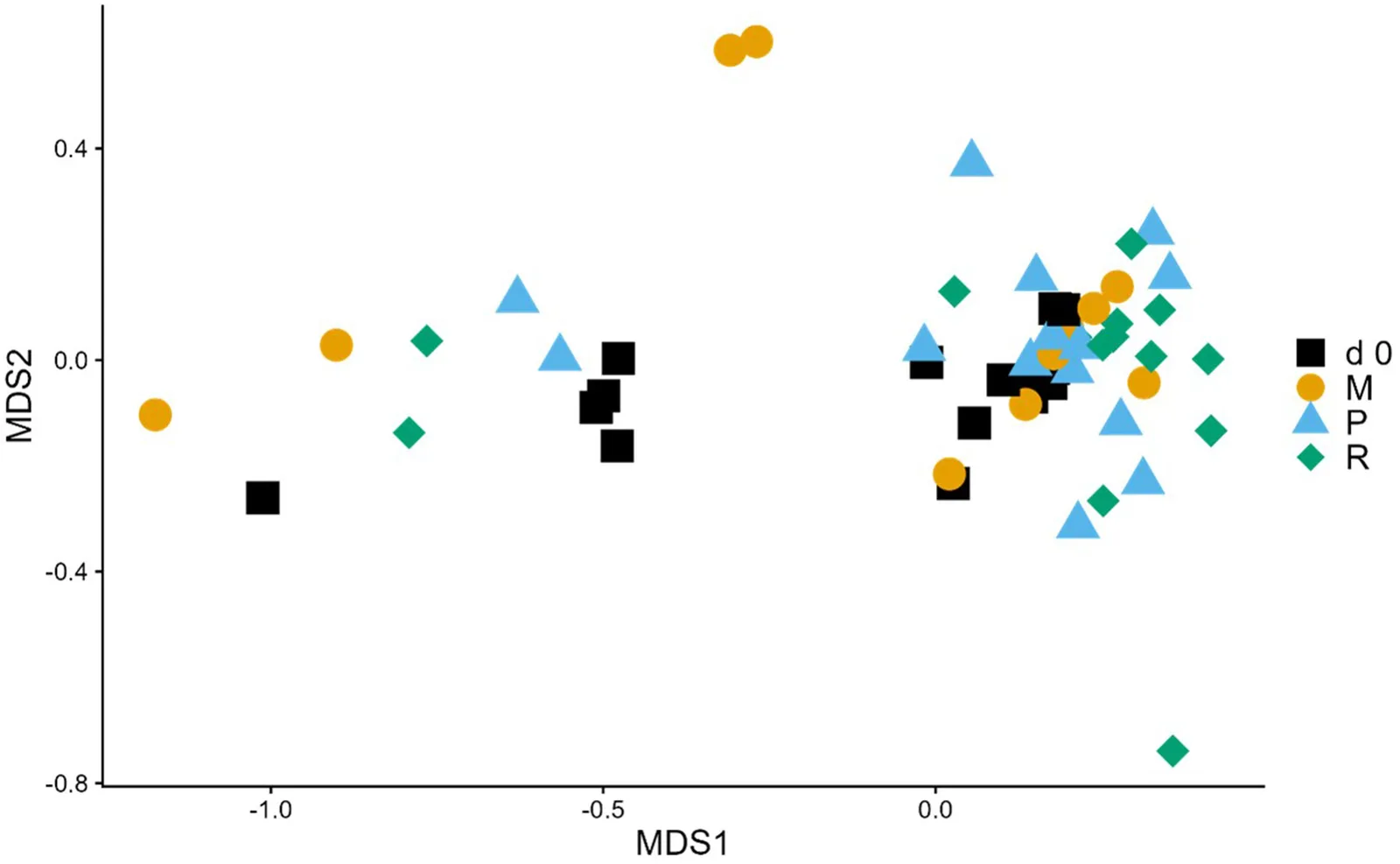
| 전체 군집 구성 | 섬유군과 기준선이 유의하게 분리되지 않음 | PERMANOVA P>0.05 (P=0.38) |
| Faecalibacterium과 Peptoclostridium | RS 급여 시 감소 | Wilcoxon 유의, FDR 보정 후에는 유의하지 않음 |
7. 비판적 평가
강점
- 같은 개에서 세 가지 섬유를 비교한 무작위 교차 설계
- 동일 완전사료로 통일하고 휴지기를 두어 식이 교란과 이월 효과를 줄임
- 임상 점수(PFS, CIBDAI)와 미생물총을 함께 평가
한계 · 의문
- SCFA 등 미생물 기능을 직접 측정하지 않았고 16S 기반 기능 예측도 개 데이터베이스 부족으로 적절하지 않음
- 건강견만 대상이라 질환견에서의 효과와 다를 수 있고 psyllium 용량이나 기간이 충분하지 않았을 가능성이 있음
- 탈락견이 많고(24마리 중 17마리), 완전한 자료는 13마리이며, 16S 시퀀싱 방법 자체의 편향 가능성이 있음
8. 향후 연구 방향
- 위장관 질환견에서 psyllium 등 섬유의 미생물총 영향 평가
- 분변 SCFA 등 미생물 기능 지표를 함께 측정
- 다른 종류의 RS(예: 고아밀로스 옥수수 전분)와 비교
9. 결론
methylcellulose는 미생물 변화 없이 묽은 변을 유발했고 psyllium의 미생물 변화는 경미하고 의미가 불확실했다. RS는 풍부도 감소와 SCFA 생산 속 감소 등 유리하지 않은 변화를 일으켜 이 RS는 개의 프리바이오틱으로 권장할 수 없다.
Keywords
dog, dietary fibre, resistant starch, psyllium, methylcellulose, faecal microbiota, 16S rRNA, prebiotic
원문 그림
원문 그림 · 라이선스: cc-by